
What Is a Hackathon?
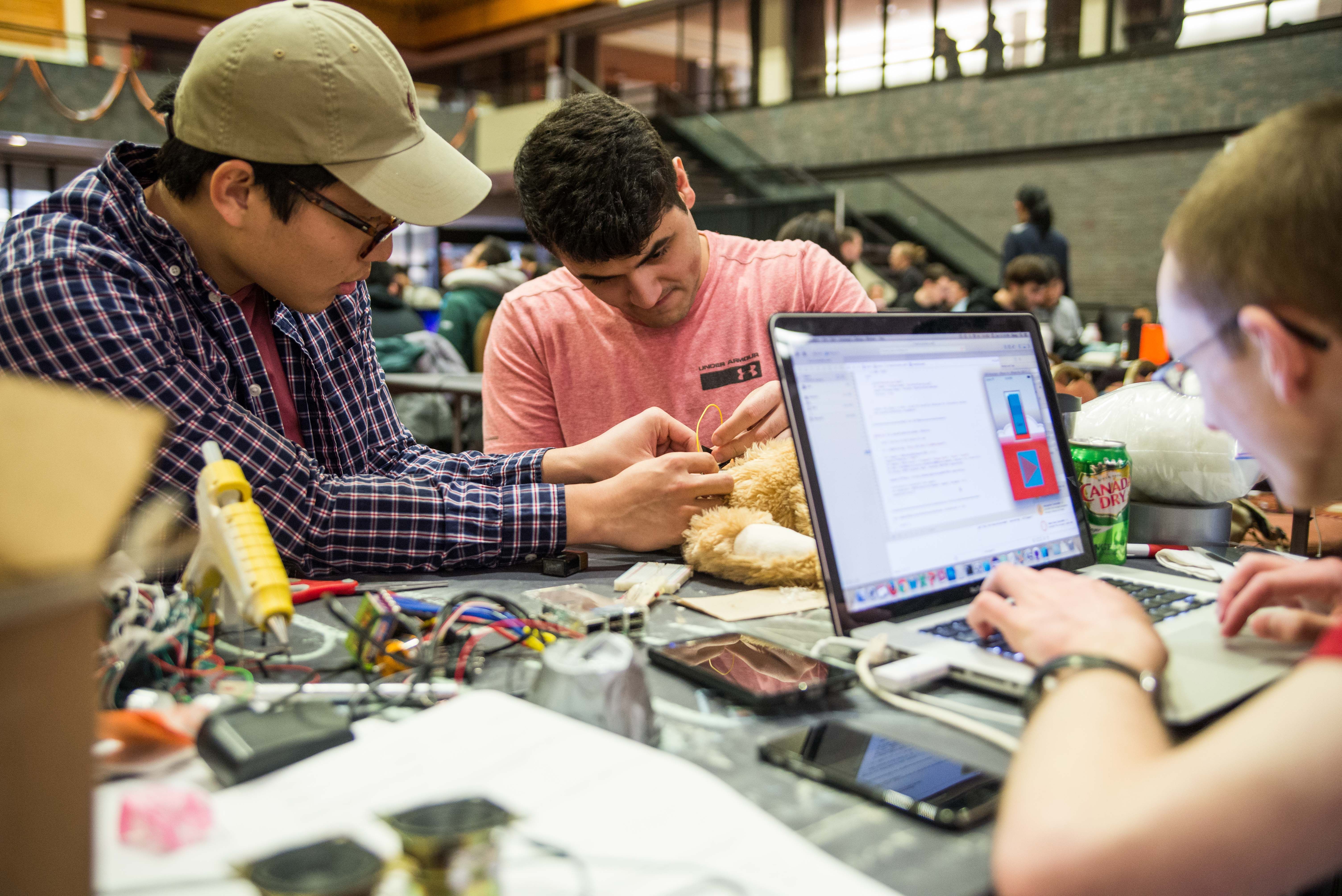
A hackathon is an invention marathon. Over a weekend, people who are curious about technology come together to learn new skills, build a project from scratch, and share what they made. Anyone can attend. You don’t need to be a professional programmer, and you don’t need to be studying computer science. You just need an idea or the willingness to find one.
The name combines hack and marathon. Here, hacking means creative building and problem-solving, not breaking into systems or more literally using heavy blows to cut or chop something apart. And marathon indicates a format: a fixed, high-energy window, usually 24 to 48 hours, where teams go from a blank page to a working prototype. Most hackathons run over a weekend, starting Friday evening or Saturday morning and wrapping up Sunday afternoon with project demos and prizes.
Who Goes to a Hackathon?
Hackathons often draw a wider crowd than most people expect. Software developers and computer science students, of course. Also designers, product thinkers, business students, hardware tinkerers, and complete beginners or software creators, who have never written a line of code. A lot of teams are made up of a very mixed set of skills and experiences.
That mix is part of the magic. The designer makes the project usable. The storyteller pitches it. The beginner learns by doing and often ships something they are proud of by Sunday. Importantly, first-timers are not behind anyone else. And in fact, at most events, they are the majority.
What Happens Over the Weekend
Every event runs a little differently, but the shape is consistent:
- Opening ceremony. Organizers cover the schedule, the rules, the theme, and any sponsor challenges.
- Team formation. Hackathon participants work solo or form teams, usually up to four people. Many events run activities to help people find teammates.
- Building. The bulk of the weekend. Teams design, build, and debug, with mentors on hand, workshops to learn from, food to keep everyone going, and mini-events for breaks.
- Submission. Teams submit their project to a platform like Devpost or Devfolio, usually with a short demo video and a write-up.
- Judging and demos. Teams present what they built to judges, who score projects on things like creativity, technical execution, and how well the idea is realized.
- Closing ceremony. Winners are announced and prizes are awarded. Then everyone goes home to sleep.
Types of Hackathons
“Hackathon” covers a lot of formats. The most common distinctions:
- In-person, online, or hybrid. In-person events happen at a venue, often a university. Digital events run entirely online. If you’re curious how the fundamentals translate to a virtual format, MLH has a breakdown of digital events.
- Software or hardware. Most hackathons are software-focused, but hardware hackathons hand teams electronics, sensors, and tools to build physical projects.
- Themed or open. Some events focus on a topic like sustainability, health, or AI. Others let teams build anything they want.
- Student or professional. Collegiate hackathons are run by and for students. Corporate hackathons happen inside companies or industry events.
Why People Go To Hackathons
The prizes are fun, but the real reason people keep coming back is the people and the learning experience. A hackathon is one of the fastest ways to learn by doing. In a single weekend, a hacker can take an idea from nothing to a working demo, pick up tools they’d never touched, and walk away with a portfolio project and a team of collaborators they didn’t have on Friday.
It’s also where like-minded community lives. Participants meet people a few steps ahead of them, get feedback from mentors, and talk to the companies sponsoring the event. Returning creators also get the chance to talk to a new set of beginners each time, expanding their thinking and approach to bring in more people and more ideas. For a lot of developers, their first hackathon is where they realized they could actually build things.
Where MLH Fits In
Major League Hacking (MLH) is the world’s largest developer community and an official student hackathon league. Each season, MLH hosts thousands of in-person and digital learning experiences across nearly 100 countries, alongside fellowship programs that help developers gain real-world experience and build lasting professional skills. MLH partners with student organizers to help them run great events, and it connects developers and software creators to a year-round community through programs, fellowships, and DEV, the developer community platform that is part of MLH.
Want to run your own? MLH’s Hackathon Organizer Guide is a free, community-built playbook for planning one from scratch.